
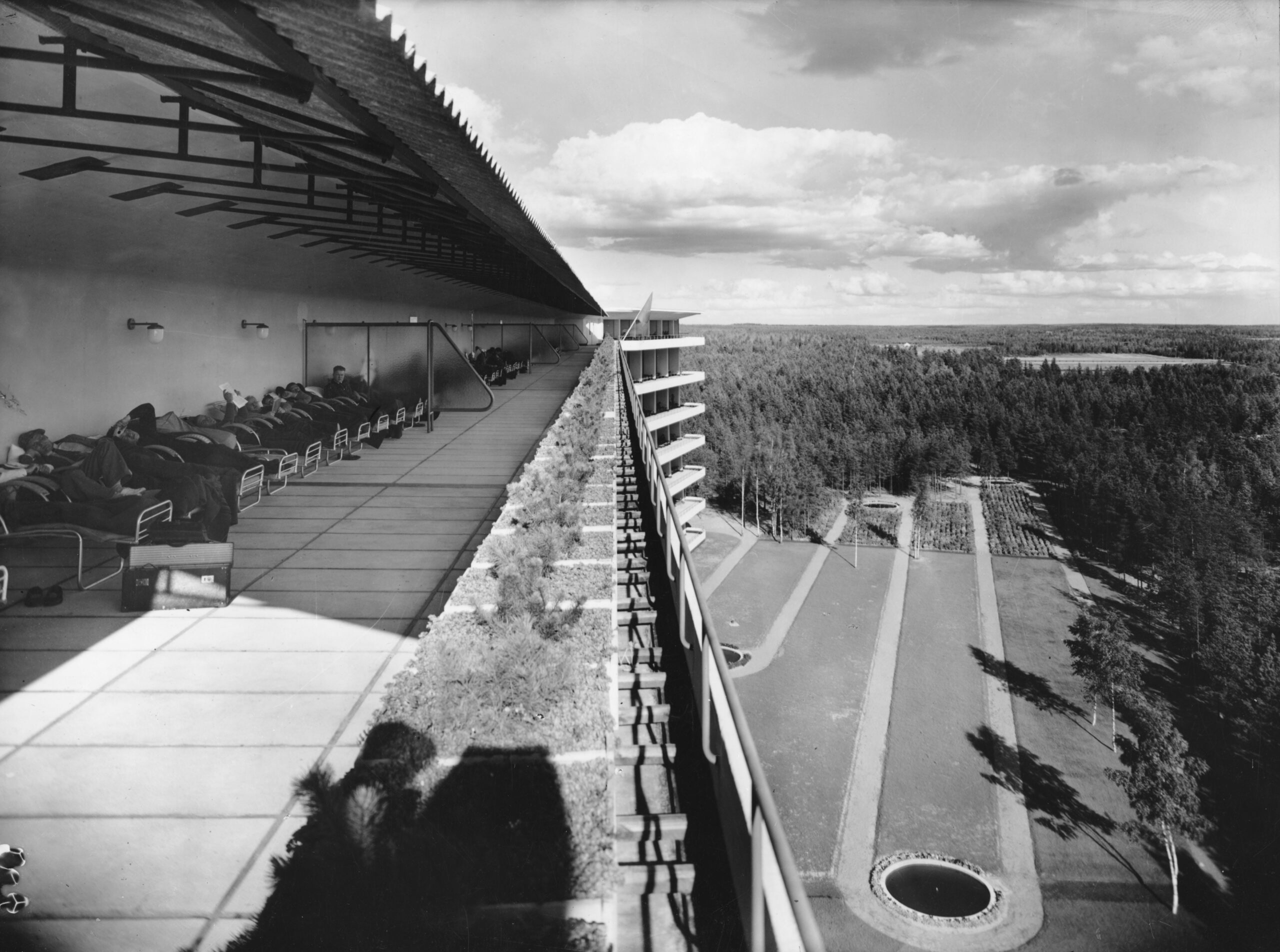
Paimio Sanatorium has been inscribed on the UNESCO World Heritage List as part of the Aalto Works series.
The decision was made by the UNESCO World Heritage Committee on 26 July in Busan, Republic of Korea.
Aalto Works is a serial World Heritage site comprising buildings and building complexes designed by Alvar, Aino and Elissa Aalto. Paimio Sanatorium is one of thirteen sites that together represent the most significant achievements of Finnish modern architecture, the development of the welfare state and a humane approach to design.
With the inscription of Aalto Works, Finland now has eight UNESCO World Heritage Sites.
Completed between 1929 and 1933 as a tuberculosis sanatorium, Paimio Sanatorium is regarded as one of the masterpieces of modern architecture and the international breakthrough of Alvar and Aino Aalto. Designed as a holistic healing environment, the architecture, interiors, furniture, lighting, colours and surrounding pine forest were all conceived to support patients’ well-being and recovery.
“The UNESCO World Heritage inscription is an extraordinary recognition of the universal significance of Paimio Sanatorium and of the visionary work of Aino and Alvar Aalto. At the same time, it marks the beginning of a new era. Our responsibility is not only to preserve this masterpiece, but to ensure that it continues to serve society for the next hundred years. Conservation and future use are not opposing ambitions—they are inseparable,” says Mirkku Kullberg, Chair of the Paimio Sanatorium Foundation.
The World Heritage inscription is the result of many years of dedicated work. Paimio Sanatorium extends its sincere thanks to the Ministry of Education and Culture, the Finnish Heritage Agency and the Alvar Aalto Foundation for their long-term commitment throughout the nomination process.
The Aalto Works Sites are:
Paimio Sanatorium (1929–33), Paimio
Alvar Aalto House (1935–36), Helsinki
Sunila Pulp Mill Residential Area (1936–38, 1947, 1951–54), Kotka
Villa Mairea (1938–39), Pori
Säynätsalo Town Hall (1949–52), Jyväskylä
Aalto Campus, University of Jyväskylä (1951–71), Jyväskylä
Seinäjoki Civic Centre (1951–87), Seinäjoki
Muuratsalo Experimental House (1952–54), Jyväskylä
House of Culture (1952–58), Helsinki
Social Insurance Institution Headquarters (1953–57), Helsinki
Alvar Aalto Studio (1954–55, 1962–63), Helsinki
Church of the Three Crosses (1956–58), Imatra
Finlandia Hall (1962/1967–75), Helsinki